Safawi Is Madinah's Black Date — Here Is the Full Definition
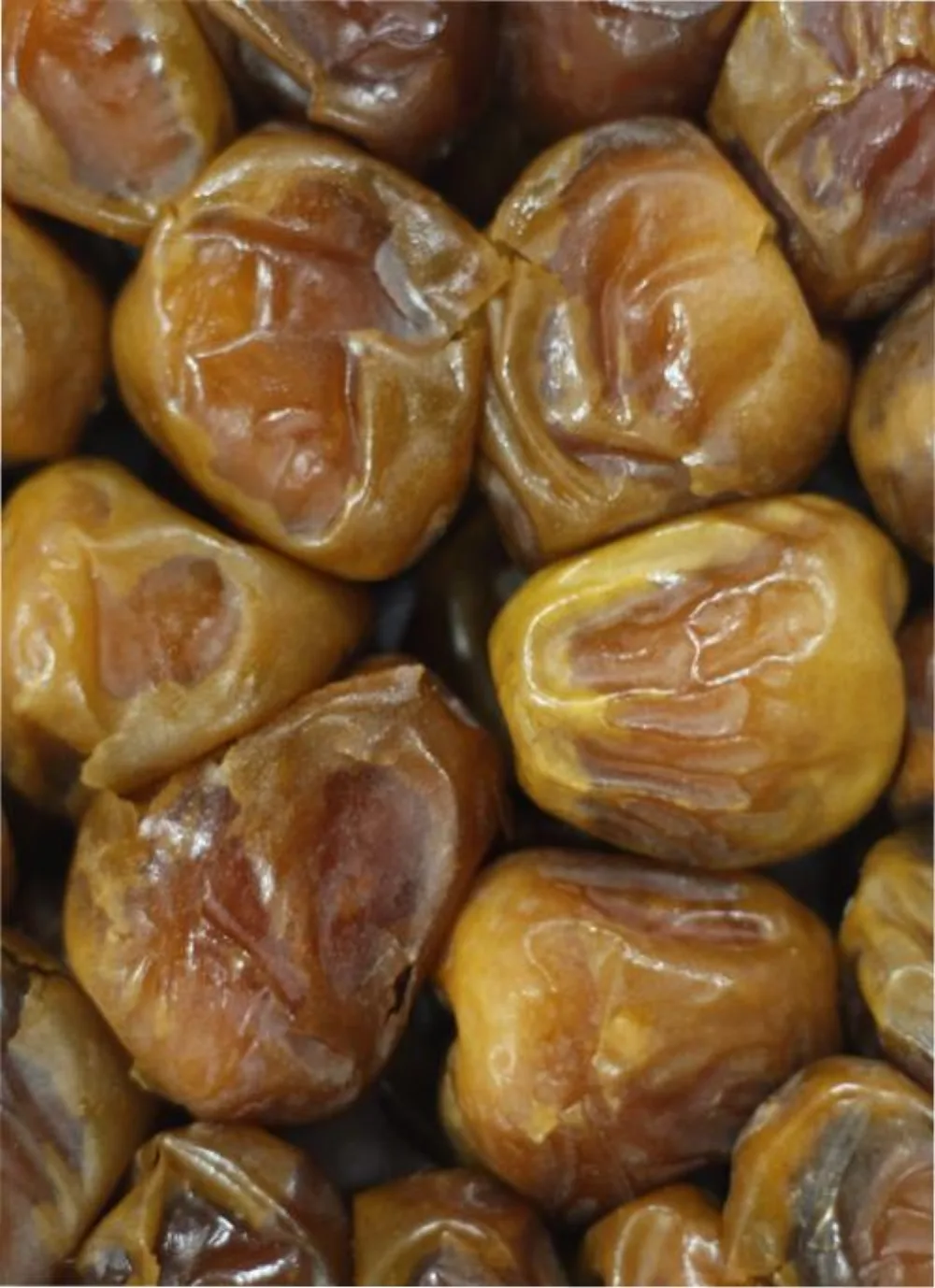
Safawi is a semi-dry date variety cultivated in the Madinah region of Saudi Arabia. Its traits are consistent and easy to recognize: a very dark brown to jet-black color, a medium-sized elongated oval shape, finely wrinkled skin, and thick, chewy flesh with a rich sweetness that finishes on a subtle earthy note. Against its close relatives, Safawi is longer than Ajwa and moister than ordinary dried dates — sitting comfortably in the middle: juicy enough to enjoy, dry enough to keep.
If you have ever tasted a chewy black date from someone's hajj or umrah souvenirs and wondered what it was called, the answer is most likely this variety. This guide walks through Safawi from definition to price, with figures from official sources — not just seller praise.
Sensory Profile: What Do Safawi Dates Taste Like?
- Color: evenly jet-black to very dark brown. A reddish-brown date sold as "Safawi" deserves your suspicion.
- Shape & size: elongated oval, medium-sized — longer and slimmer than the rounder Ajwa.
- Texture: semi-dry; thick, chewy flesh that neither sticks to your fingers nor turns hard.
- Taste: a rich, dark-caramel sweetness with a soft earthy finish; deep rather than sharp.
- Aroma: calm dark sweetness with no fermented sourness — a sour-smelling date signals poor storage.
Origin and Production Data: More Than a "Madinah" Label
Plenty of date packs use the word Madinah as marketing seasoning. For Safawi, the claim can be tested against official numbers. Madinah province holds about 4.75 million date palms across 26,000 farms, producing over 213,000 tonnes of dates from roughly 70 varieties. For Safawi specifically, the Saudi Press Agency recorded 5,576,647 kg — about 5,577 tonnes — in 2023, placing it among Madinah's top varieties after Ajwa and Sukkari. In the 2025 harvest season, around 58 varieties were marketed, and Safawi was consistently named among the best-known alongside Ajwa, Anbara, Barni, and Ruthana.
The national context is equally large: Saudi Arabia produces around 1.9 million tonnes of dates per year — the world's second-largest producer with ±17% of global output. And at the Madinah Central Date Market, where Indonesian pilgrims shop for souvenirs, Ajwa and Safawi are the two best-selling varieties. This is why Safawi tastes familiar to so many Indonesian families: it really is the date most often carried home.
Safawi, Sawafi, Safawy, or Shafawi — Which Spelling Is Correct?
On Indonesian marketplaces you will find titles like "Korma Safawi Safawy Shafawi Sofawi" — sellers stuffing every spelling variant to catch search engines. Even national media has misspelled it as "Sawafi". The standard and most accurate spelling is Safawi (from Arabic, sometimes romanized Saffawi). Variants like sawafi, safawy, shafawi, and sofawi all refer to exactly the same variety — the differences are pure transliteration, not different dates. So when two packs labeled "Safawi" and "Shafawi" carry wildly different prices, the real differentiators are grade, fruit size, and the seller's honesty — never the spelling.
Kalmi Dates: Safawi's Other Name in South Asia
One alias is worth knowing, especially for Jakarta's expat and Indian communities: in India and across South Asia, Safawi is traded as Kalmi dates. Major Indian platforms list "Imperial Safawi Dates, Kalmi Dates" as one and the same product. If a colleague is hunting for kalmi dates in Jakarta, point them to Safawi — same fruit, different trade name. At Safawi Madani we serve English-language orders for both "safawi dates" and "kalmi dates" searchers, with the same transparent IDR pricing and delivery across Greater Jakarta.
Where Safawi Stands Among Madinah's Black Dates
Madinah has three dark dates that are constantly confused: Ajwa, Safawi, and Mabroom. Ajwa is the most celebrated — named specifically in an authentic hadith — and the most expensive. Mabroom is long and slim with a drier, chewier bite. Safawi stands in the middle as the most rational choice: the same black, rich character family as Ajwa, at a far friendlier price. Many of our customers call it "80% of the Ajwa experience at half the price" — and honestly, for daily consumption, that is exactly where it wins. We unpack the full comparison in our Safawi vs Ajwa article.
How Much Do Safawi Dates Cost in Indonesia?
The Indonesian market does buyers no favors: listings scatter from about Rp20,000 (250g promos) to Rp300,000 with zero grade explanation. As a transparent benchmark at Safawi Madani as of June 2026: 250g trial pack Rp32–48k; 500g Premium Rp79–95k; 1kg Premium Rp150–175k (Grade A Rp110–135k); 5kg cartons and 8kg boxes effectively Rp105–130k per kg. All published openly on our product pages — no login, no backroom haggling.
Conclusion: A Variety with Its Own Identity
Safawi is proof that Madinah dates are not only about Ajwa. It has serious official production numbers, an honored position at the Madinah central market, the most loyal repeat buyers in Indonesia, and a flavor profile that stands on its own: jet-black, chewy, dark-caramel sweet. Start with a 250g or 500g pack and you will understand why this variety keeps people re-ordering — from Jakarta, Depok, Tangerang, and Bekasi to Bogor.