
One Variety, Three Challengers
After our Safawi vs Ajwa piece, three follow-up questions arrive most often: what is the difference between Safawi and Mabroom? Between Safawi and Sukari? And how does Safawi compare to Medjool, now filling Indonesian supermarket shelves? We answer all three in one guide, with the same principles: accurate physical data, realistic pricing, and verdicts that do not herd you.
Safawi vs Mabroom: The Two Most-Confused Dark Dates
Mabroom is Safawi's "twin" in the eyes of casual buyers: both dark, both elongated, both from Madinah's farms. Yet telling them apart is easy once you know the keys:
- Shape: Mabroom is longer and clearly slimmer — the most "slender" of the popular Madinah varieties. Safawi is a fuller medium oval.
- Color: Mabroom is dark-reddish; Safawi is jet-black. Place them side by side under light — the difference is immediate.
- Texture & taste: Mabroom is drier and firmer with a light, elegant sweetness; Safawi is moister and chewier with a deeper dark-caramel sweetness.
- Price: Mabroom's tighter supply generally prices it above Safawi at equivalent grades.
Verdict: choose Mabroom for a dry-firm bite and an elegant long silhouette on the serving plate; choose Safawi for juicier daily enjoyment at a friendlier price. If a "Safawi" you received looks reddish and very slim, it is probably Mabroom — or the seller is confused.
Safawi vs Sukari: Black and Chewy vs Golden and Soft
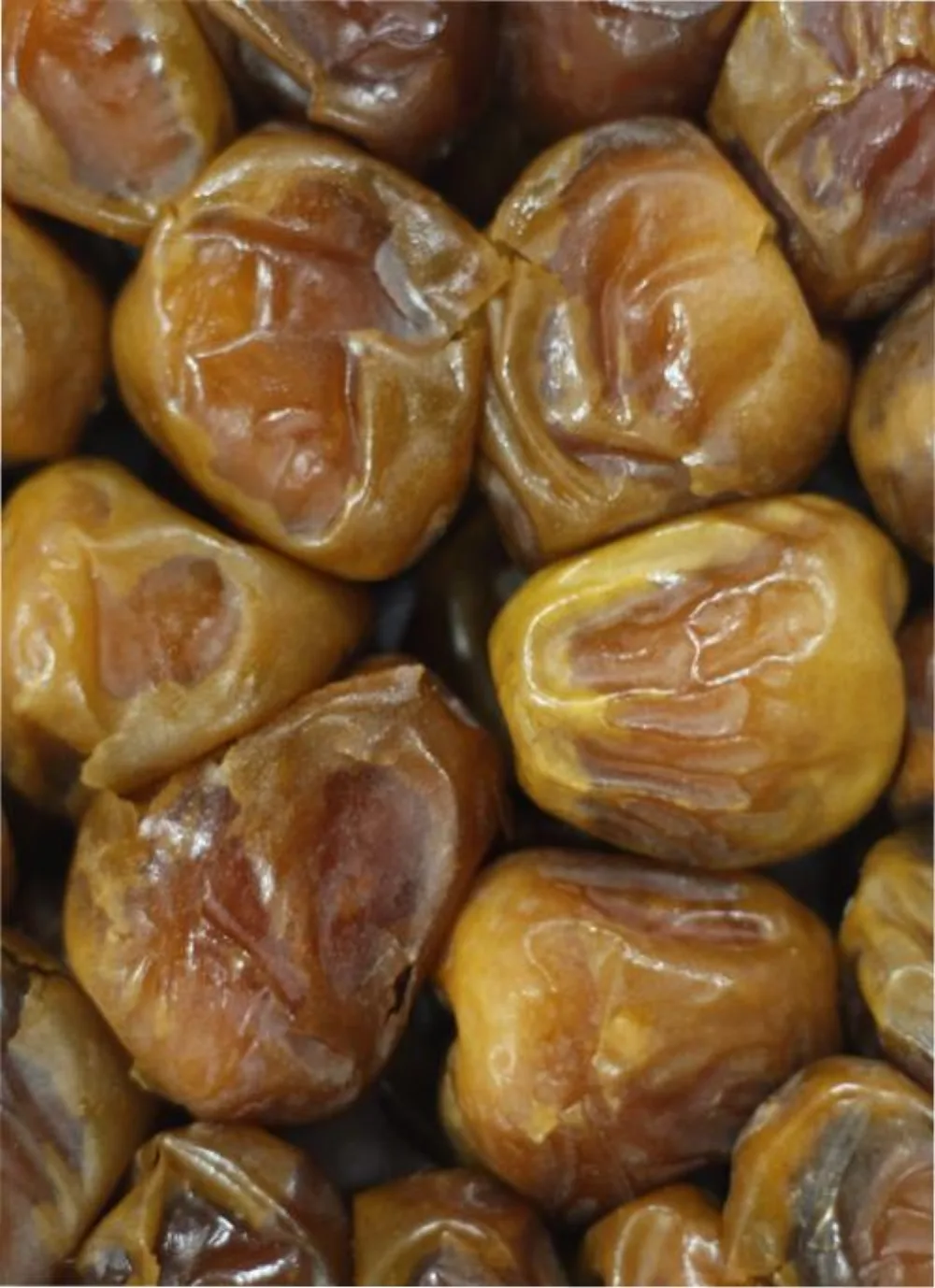
This comparison is really a comparison of two worlds. Sukari — "the sweet one" from the Al Qassim region, not Madinah — is golden-yellow with a soft texture that can crisp at the edges, and a bright sweetness like young caramel sugar. Safawi is its opposite on nearly every axis: jet-black, semi-dry, chewy, with a deep dark sweetness.
| Aspect | Safawi | Sukari |
|---|---|---|
| Region of origin | Madinah | Al Qassim |
| Color | Jet black | Golden yellow |
| Texture | Chewy, semi-dry | Soft, sometimes crisp |
| Sweetness profile | Dark caramel, earthy | Bright, sugar-like |
| General character | "A date that tastes like a date" | "The crowd-pleasing beginner date" |
Verdict: purely a matter of taste, not quality. Households that love bright sweetness and soft texture will be happy with Sukari; lovers of depth and a satisfying chew will stay loyal to Safawi. Many families stock both: Sukari for the kids, Safawi for the adults and the coffee table.
Safawi vs Medjool: The Everyday Choice vs the Imported Premium
Medjool — often crowned "the king of dates" — is now easy to find in Indonesian supermarkets, typically from Palestine, Jordan, or the US. The fruit is jumbo-sized, the flesh very soft and moist, the sweetness brightly caramel. So where does Safawi stand?
- Size: Medjool is far larger — one piece can weigh twice a Safawi. For dramatic table presentation, Medjool wins.
- Texture: Medjool is soft almost like preserves; Safawi is chewy with structure. International sources describe Safawi as chewier with a more intense flavor, while Medjool is soft and caramel-like.
- Price: here lies the most practical difference — imported premium Medjool routinely costs far more than Safawi per kilogram. For routine family consumption, the monthly gap is significant.
- Cultural context: Safawi carries the Madinah story and pilgrimage nostalgia; Medjool carries an international gourmet image.
Verdict: Medjool for show-off moments and recipes needing soft date flesh (smoothies, stuffed dates); Safawi for a sustainable daily habit — the date you can afford every month without a second thought, with a character that never gets boring.
Test Them Yourself at Home: The Four-Variety Sampler
Tables are only half the story; your palate is the other half. The fairest way to test all four: prepare two pieces of each at room temperature, taste from lightest to deepest — Sukari first, then Medjool, Mabroom, and close with Safawi — with a sip of water in between. Note three things per variety: the first impression of sweetness, the texture as you chew, and what lingers after thirty seconds. If you want to keep it simple, start with two varieties — Safawi plus one challenger — before completing the set. Our own families split into two camps, and that is normal. What matters is that your monthly subscription decision is born from your own tasting, not from the word "premium" in a listing title.
One budget note: for the same month of family consumption, choosing Safawi over imported premium Medjool can save hundreds of thousands of rupiah. Multiply by a year, and the difference equals a full Ramadan's worth of date stock.
The Big Table: Safawi vs Everyone
| Aspect | Safawi | Mabroom | Sukari | Medjool |
|---|---|---|---|---|
| Color | Jet black | Dark reddish | Golden | Deep brown |
| Texture | Chewy | Dry-firm | Soft-crisp | Very soft |
| Fruit size | Medium-long | Long, slim | Medium | Jumbo |
| Price position | Rational middle | Mid-high | Middle | Premium |
| Best role | Daily & iftar | Elegant hosting | Beginner-sweet | Gourmet & recipes |
Conclusion: Know the Job, Then Pick the Variety
No variety wins outright — there are only varieties suited to particular roles. What we fight for at Safawi Madani is that you choose with honest information: accurate photos, explained grades, and open prices. If your conclusion is Safawi — like most of our repeat buyers — Grade A and Premium Safawi run from 250g trial packs to 8kg boxes, delivered same-day from Cakung across Jakarta, Depok, Tangerang, Bekasi, and Bogor.


