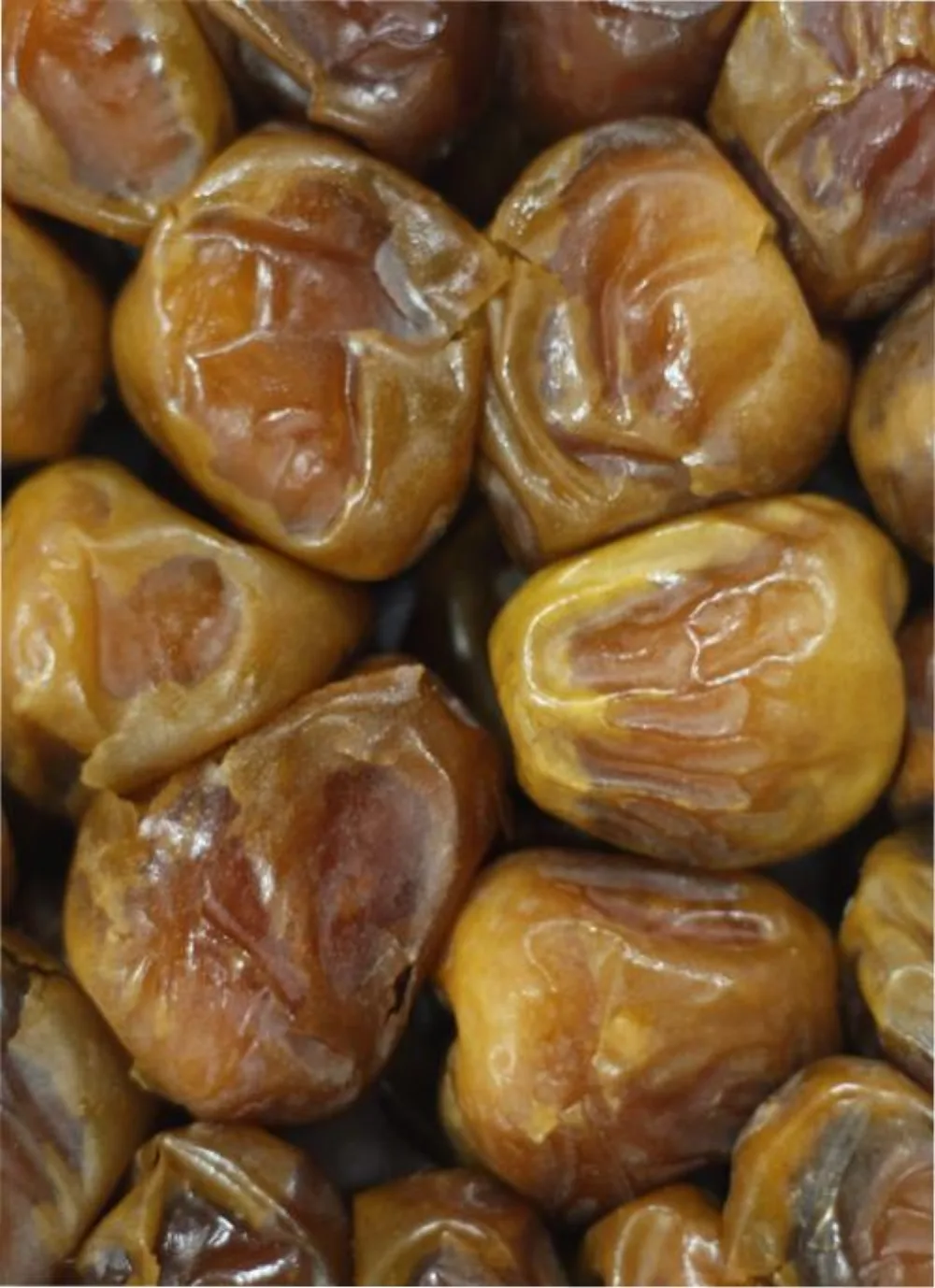
The Two Black Madinah Dates Everyone Compares
"What is the difference between Safawi and Ajwa dates?" is probably the question we receive most often on WhatsApp. Understandably so: both are dark dates from Madinah's farms, both are sold as pilgrimage souvenirs, and both lead sales at the Madinah Central Date Market according to the official Saudi press agency. But behind the resemblance lie real differences — in the fruit, in the textual virtue, and above all in the price. This article dissects them with no agenda to steer you toward the most expensive option.
Physical Differences: Telling Them Apart in 10 Seconds
- Shape: Ajwa is short and rounded, like a large slightly oval marble; Safawi is clearly elongated, longer and slimmer.
- Color & skin: Ajwa is greyish-black with dense, deep wrinkles and sometimes a natural fine "dusty" look; Safawi is jet-black, slightly glossy, with finer, more regular wrinkles.
- Size: both are medium-class, but Safawi feels more substantial per piece thanks to its long, thick-fleshed shape.
Hold one of each: the softly yielding, almost fudge-like one is Ajwa; the dense, chewy one is Safawi.
Taste and Texture Differences
Ajwa has a soft, fudge-like texture with a calm, complex sweetness — some describe hints of raisin and faint chocolate. It is the least sweet-forward of the popular dates, which feels refined but sometimes surprises buyers expecting rich sweetness.
Safawi is semi-dry: thick flesh that chews pleasantly, never sticky, with a rich dark-caramel sweetness and a signature earthy finish. For palates that want a date to "taste like a date", Safawi often wins home blind tests — the experience behind our customers' favorite phrase: "80% of the Ajwa experience at half the price".
The Virtue Difference: What Needs Straightening Out
This is the most frequently blurred part, and we choose honesty. An authentic hadith narrated by Bukhari states that whoever eats seven Ajwa dates in the morning is protected from poison and magic that day — the variety is named specifically: Ajwa. A narration in Muslim words it as "seven dates from the area between Madinah's two lava plains". Safawi is not named in any hadith. It is cultivated in the same Madinah region — home to 4.75 million date palms — but seller claims equating Safawi's virtue with Ajwa's are marketing, not scripture. If your primary goal is practicing the hadith textually, choose Ajwa from a trustworthy seller. If your goal is enjoying quality Madinah dates daily, Safawi is the answer that needs no scriptural footnote.
The Price Difference: Not a Small Gap
In the Indonesian market, premium Ajwa routinely sells at two to three times the price of equivalent-grade Safawi — and precisely because of that premium, Ajwa is the most counterfeited variety, sometimes via other dark dates relabeled as Ajwa. Safawi is barely worth faking: its price gap against other dark dates is too thin to tempt counterfeiters. Buying Safawi therefore also buys peace of mind: the risk of variety fraud is far lower.
Summary Table: Safawi vs Ajwa
| Aspect | Safawi | Ajwa |
|---|---|---|
| Shape | Elongated oval | Short, rounded |
| Color | Jet-black, slightly glossy | Greyish-black, deep wrinkles |
| Texture | Chewy, semi-dry | Soft, fudgy |
| Taste | Dark caramel, earthy | Calm, complex sweetness |
| Named in hadith | No | Yes (specifically, Bukhari) |
| Relative price per kg | 1× (Rp110–175k) | ±2–3× |
| Counterfeit risk | Low | Highest |
| Ideal role | Daily eating, iftar, family stock | Specific practice, special moments |
Market Context: How Each Sells in Indonesia
Understanding how each variety is sold helps you read prices. Safawi flows steadily into Indonesia because Saudi Arabia is the country's second-largest date supplier — 11,510 tonnes across 2025 — and Madinah's own Safawi production reached 5,577 tonnes in 2023. Healthy supply keeps Safawi relatively stable at Rp110–175k per kg from Grade A to Premium. Ajwa is different: supply is far tighter (±900,000 Ajwa trees out of Madinah's 4.75 million date palms), demand is emotional, and its market chain is the one counterfeiters infiltrate. During Ramadan — when national date sales jump 50–300% — the gap widens further: Ajwa prices ride the seasonal demand while Safawi stays within family reach.
The practical lesson: when you find "cheap Ajwa" priced like Safawi, that itself is the alarm — either the grade is very low, the stock is old, or the variety is not Ajwa at all. A price too good to be true usually is not true.
Verdict: When to Choose Safawi, When to Upgrade to Ajwa
Choose Safawi if you want a black Madinah date for routine enjoyment — family iftar, healthy office snacking, hosting guests — on a budget that stays sane. Its dark, rich character belongs to the same family as Ajwa, supply is stable, and every rupiah pulls its weight. Upgrade to Ajwa if your intention is specifically the seven-dates hadith, or a gift that demands the most celebrated variety — and even then, buy from a seller transparent about authenticity. Many families end up doing both: Ajwa reserved for the morning practice, Safawi as the everyday date whose stock never runs dry.
Whichever you choose, start with a seller willing to print grades and prices openly. At Safawi Madani, Grade A and Premium Safawi run from 250g packs to 8kg cartons with clearly listed prices and same-day delivery across Jakarta, Depok, Tangerang, Bekasi, and Bogor.